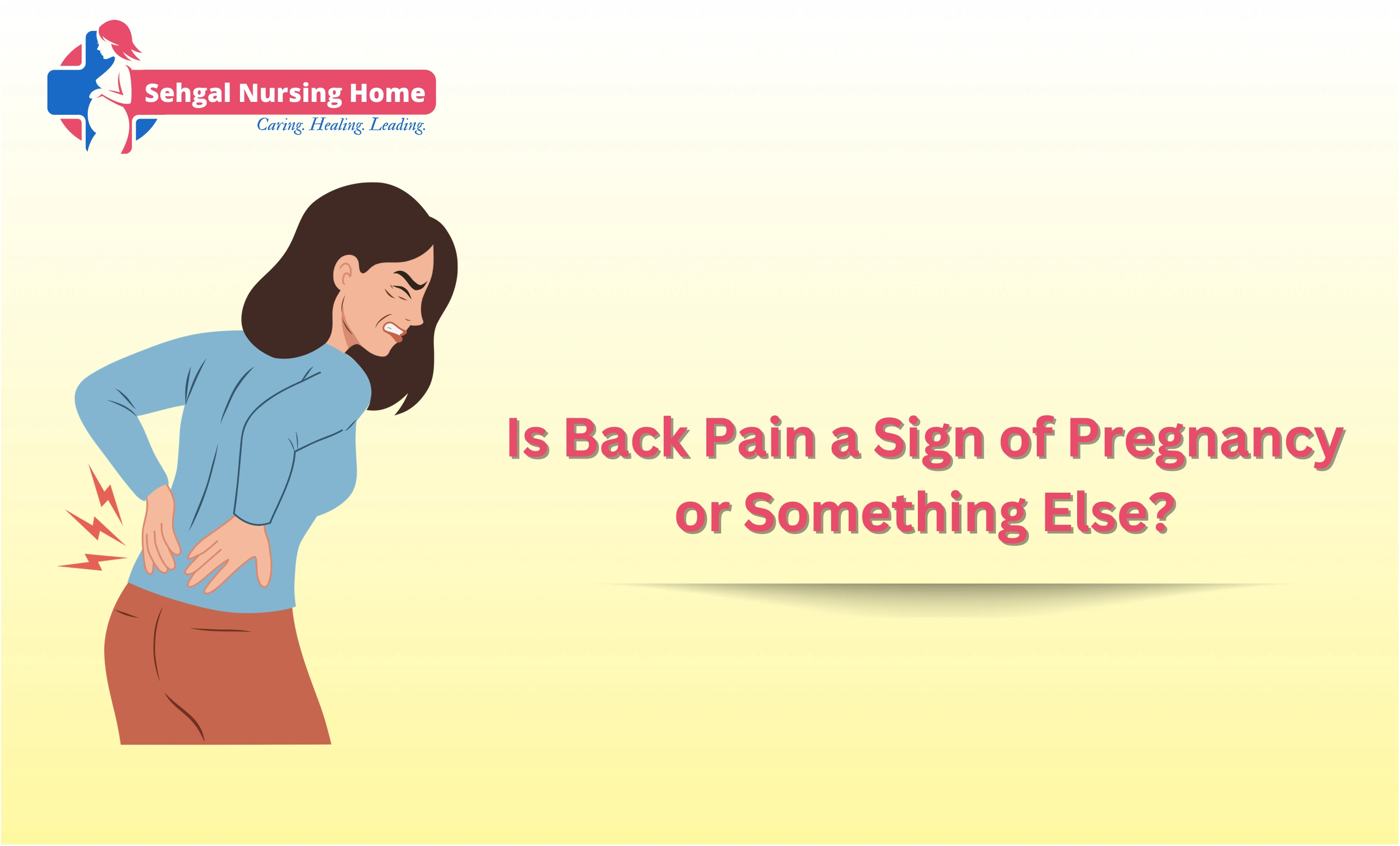
Back pain is one of the things women bring up most in the reproductive years, and it is also one of the hardest to place. It turns up before a period. It turns up in the first days of a pregnancy. It also turns up for reasons that have nothing to do with either. So a late period and an aching lower back together do not settle the question on their own.
Early pregnancy produces back pain by more than one route. Implantation is the first. The fertilised egg embeds into the uterine wall somewhere around six to ten days after ovulation, and some women feel a dull cramping ache low in the back and pelvis while it happens. Light spotting sometimes comes with it. That spotting gets read as a period starting more often than not.
After the egg has embedded, the body starts releasing relaxin. The hormone loosens ligaments and joints ahead of everything that comes later, and that added looseness on its own is enough to leave the lower back sore even this early. Later the uterus expands and presses on what sits around it, and the ache builds from there as the weeks add up.
Back pain that shows up just before a period, or during it, usually traces to prostaglandins. These are the hormone-like compounds behind uterine contractions, a normal part of menstruating, and the ache tends to ease within a day or two of bleeding starting. When a period is due it can be genuinely hard to tell apart from the implantation kind.
There are other causes that have nothing to do with any of this, and they come up often enough to be worth listing.
Back pain needs looking at without much delay when it is severe, when it keeps worsening instead of easing, when a fever comes with it, when urinary symptoms come with it, or when there is heavy bleeding alongside. At Sehgal Nursing Home, the team can help tell early pregnancy changes apart from the other causes, and that usually comes down to a clinical assessment, a urine test, and an ultrasound where the picture calls for one.
A home pregnancy test after a missed period is a reasonable first move. If the result reads unclear, or the symptoms stay, it is worth coming in. Book an appointment at www.sehgalnursinghome.com or call +91-9354546835.
Q1. Can back pain appear before a missed period if I am pregnant? It can. Some women pick up a mild lower back ache around the time of implantation, which lands before a period would be due. On its own though it does not tell you much, and it is not something to read a pregnancy into by itself.
Q2. How is pregnancy-related back pain different from period pain? The two feel much alike. The pregnancy kind tends to hang around, and it often travels with other early signs, breast tenderness or fatigue or nausea. Period pain usually lifts once the flow has started.
Q3. Should I take pain relief for early pregnancy back pain? Better not to self-medicate here, NSAIDs like ibuprofen especially, not in early pregnancy without advice. Paracetamol is generally treated as the safer option, but check with a doctor before reaching for anything at all.
Q4. When does pregnancy-related back pain usually peak? For most women it is the second and third trimesters that are worst, when the uterus has grown and posture has shifted with it. The early pregnancy version is usually on the milder side.
© 2026 Sehgal Nursing Home, Inc. All rights reserved | Website designed by Digital Net India