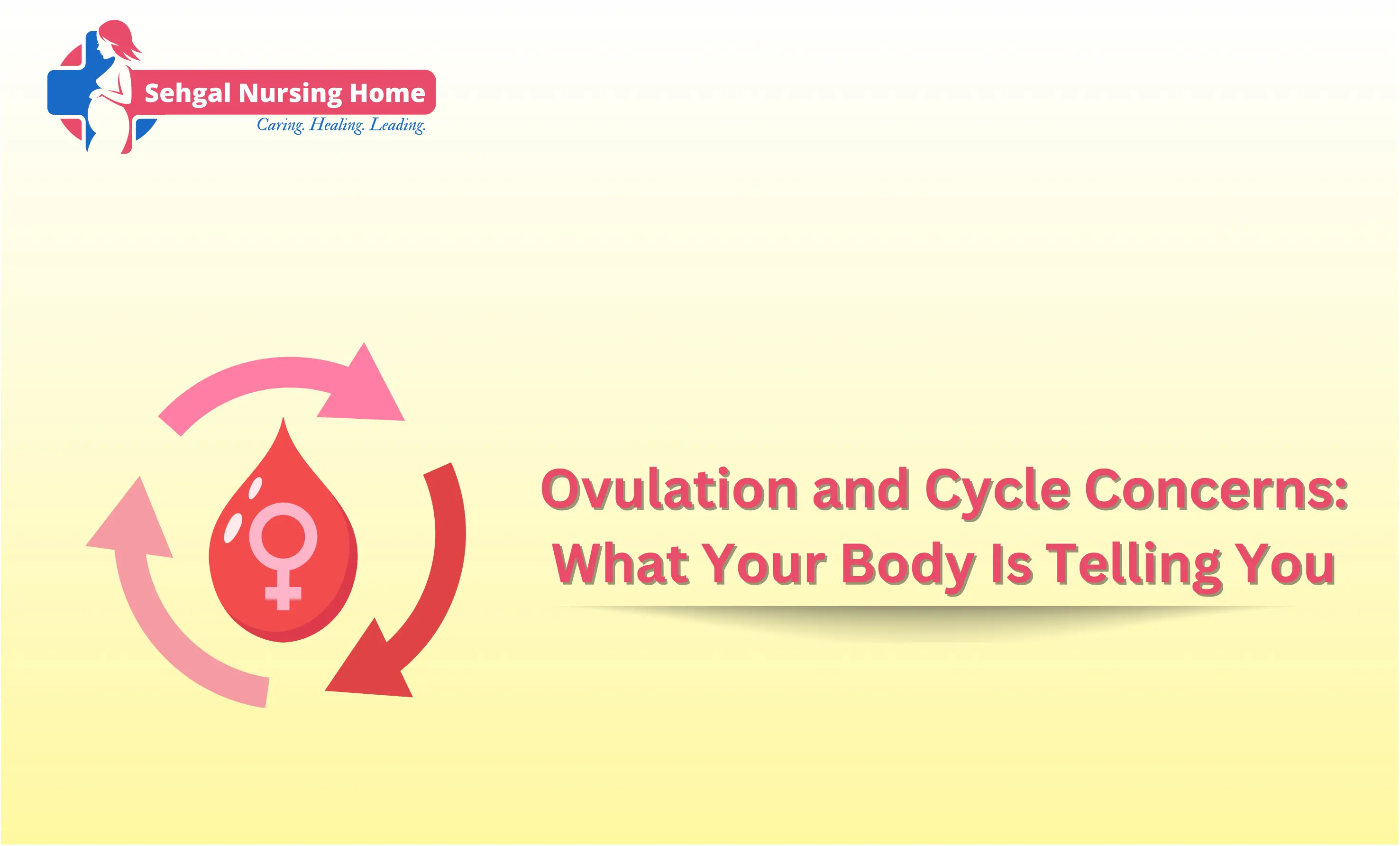
Natural conception rests on ovulation. Nothing gets fertilised without it. And yet for a fair number of women ovulation runs irregular, or unpredictable, or simply does not happen, and it often does that without any obvious sign to go on. Learning what healthy ovulation looks like, catching the point where something seems off, and knowing when it is time to ask for medical help, all of that can make a real difference to how the road to pregnancy goes.
A healthy menstrual cycle tends to run somewhere between 24 and 35 days, with ovulation landing around the middle of it. There are a few signs it is happening. Some women get a brief sharp pain on one side of the lower abdomen, the mittelschmerz. Basal body temperature lifts a little just after ovulation and holds there. Cervical mucus shifts too, turning clearer and more slippery and stretchy in the run-up, close to the feel of raw egg white. And a home LH surge test, the ovulation predictor kit, can pin the timing down if you want it confirmed.
Polycystic ovary syndrome (PCOS) is the one behind most ovulation disorders, and it reaches a sizeable share of women in the reproductive years. The hormonal imbalance in PCOS keeps the ovarian follicles from maturing and letting an egg go on any regular schedule, so ovulation comes infrequently or not at all and the periods run irregular with it.
Hypothalamic amenorrhea is a different mechanism, where the hypothalamus, the part of the brain that runs the reproductive hormones, dials down or stops the signals it sends the ovaries, usually after something like heavy weight loss or hard physical training or long-running stress, and the result is periods that stop and ovulation that does not come.
Primary ovarian insufficiency (POI) is its own thing again, ovarian function that drops or goes before the age of 40. A woman with POI might still ovulate here and there, but the cycle is not something you can predict and the ovarian reserve has thinned out.
Thyroid disorders belong in this group as well, the underactive and the overactive both, either one able to upset the hormonal axis that ovulation depends on, which is why thyroid function is among the first things looked at when the cycles are irregular, being both common and treatable.
Elevated prolactin (hyperprolactinaemia) often traces back to a small harmless pituitary growth called a prolactinoma. It holds ovulation down, the periods come irregular or not at all, and now and then there is nipple discharge outside of any breastfeeding.
It starts with a proper menstrual history and a set of blood tests aimed at the usual suspects, FSH, LH, AMH, prolactin, TSH, and oestradiol some of the time. A transvaginal ultrasound gives a look at the ovaries for how the follicles are developing, and it picks up the antral follicle count that is the tell for PCOS. Where a LH surge keeps not showing on repeated home tests, or the cycles stay irregular, that is the point a medical evaluation is worth having.
If your cycles are unsettled and conceiving has been a struggle, taking it to the team at Sehgal Nursing Home, a trusted name among the best infertility hospitals in Delhi, can hand you some clarity and a plan with a shape to it. Ovulation disorders sit among the more treatable causes of infertility there are, and catching them early gets to results sooner. To book an ovulation and fertility assessment, visit www.sehgalnursinghome.com or call +91-9354546835.
Q1. How do I know if I am not ovulating? The surest signs are periods that come irregular or not at all, no LH surge turning up on home testing, and a basal body temperature chart that stays flat month on month. A progesterone blood test taken on day 21 of the cycle can settle whether ovulation actually happened.
Q2. Can I still get pregnant if I have PCOS? Yes. PCOS is very manageable. A lot of women with it conceive on lifestyle changes, or on ovulation-inducing medication like letrozole or clomiphene, or with IUI. IVF comes in when the simpler options have not done it.
Q3. Are irregular periods always a sign of an ovulation problem? Not always, though they are the most common sign of one. A cycle that keeps landing outside the 24 to 35 day range, or swings a lot from one month to the next, is worth having a specialist look at.
Q4. Can stress cause me to stop ovulating? Yes. Real physical or emotional stress can shut down the hypothalamic-pituitary-ovarian axis and bring on hypothalamic amenorrhea. Dealing with whatever is driving the stress, with medical support alongside it where that is needed, restores ovulation in a good many cases.
© 2026 Sehgal Nursing Home, Inc. All rights reserved | Website designed by Digital Net India