When a couple has had their family and is thinking of permanent contraception, two procedures take centre stage, namely, tubectomy in women and vasectomy in men. Both are very effective, minimally invasive and commonly done.
But in clinical practice, tubectomy is much more frequently selected, often because couples have not been fully informed about vasectomy as a valid and equally simple alternative.
This is an evidence-based and clear-cut comparison that can enable you to make the correct decision jointly.
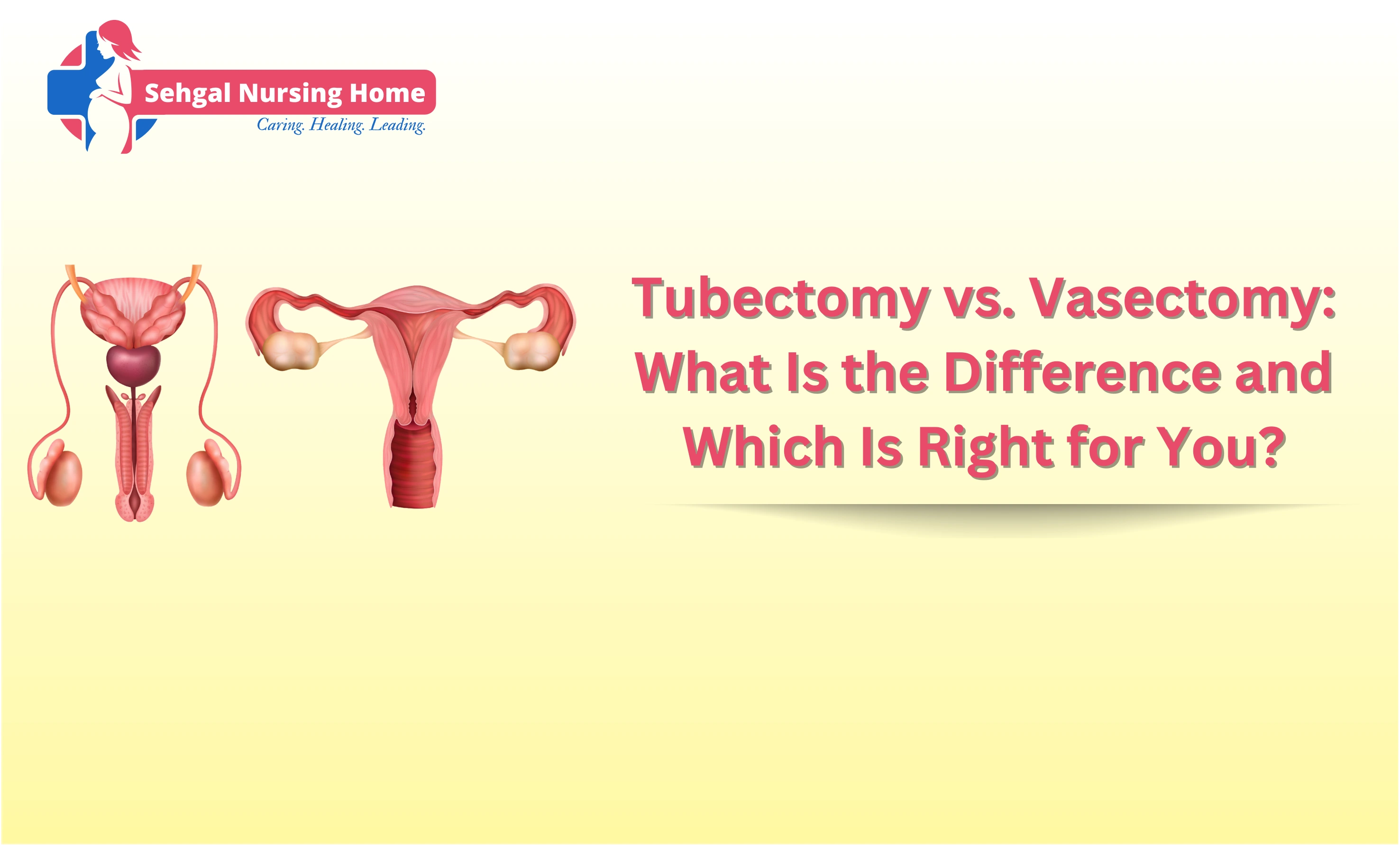
A tubectomy (also known as female sterilisation or tubal ligation) is a medical operation where the fallopian tubes are cut, tied, blocked, or sealed to permanently prevent the release of eggs to the uterus, where they can be fertilised.
It is done under general or regional anaesthesia, most frequently through laparoscopy through a small abdominal incision. The process is about 30 minutes. Postpartum tubectomy, which is performed right after childbirth, is one of the most popular family planning methods in India. Greater than 99% when performed correctly.
Suggest to Read :- Cramping After An IUI: Is It Normal
A vasectomy is a minor surgical procedure that is performed on men whereby the vas deferens, the tube through which the sperm in the testes travel to the urethra, is cut, tied or sealed. In the absence of this pathway, sperm cannot penetrate the semen, and fertilisation cannot occur.
Vasectomy is done under local anaesthesia in an outpatient facility. It is completed in 1520 minutes, it does not require any hospitalisation, and it entails a lot less surgical risk than a tubectomy. More than 99.9%, which makes it slightly more effective than tubectomy.
|
Factor |
Tubectomy |
Vasectomy |
|
Who undergoes it |
Woman |
Man |
|
Anaesthesia |
General or regional |
Local |
|
Procedure duration |
30–45 minutes |
15–20 minutes |
|
Hospitalisation |
Usually required |
Usually not required |
|
Recovery time |
3–7 days |
1–2 days |
|
Surgical complexity |
Higher |
Lower |
|
Effectiveness |
>99% |
>99.9% |
|
Reversibility |
Difficult, rarely successful |
Difficult, occasionally successful |
|
Complication risk |
Slightly higher |
Minimal |
The choice is highly personal and must take into consideration the health, comfort and preferences of both partners, rather than making a default assumption of who should have the responsibility.
Vasectomy is medically easier, less risky, takes less time to recover from, and is done with local anaesthesia. However, the world over and especially in India, women are sterilised at disproportionately higher rates than men, and in most cases not on medical grounds but on social grounds.
According to the WHO, the rising male involvement in family planning is an important measure that can greatly enhance the overall reproductive health of couples.
Tubectomy is still preferred in cases where postpartum sterilisation is intended immediately after delivery or where the man has contraindications to vasectomy, such as prior scrotal surgery or anatomical variations.
At Sehgal Nursing Home, we advise both partners jointly before any permanent contraception decision, ensuring that it is informed, joint consent and not a default to the procedure of the woman.
Does a tubectomy affect menstrual cycles or hormones?
No, tubectomy has no effects on hormone production and the menstrual cycle. Periods continue as normal. The only difference is that the eggs can no longer be fertilised.
Is a vasectomy painful?
The majority of men have mild discomfort and swelling of the scrotum for 2-3 days after the procedure. Much pain is not typical. The majority are back to work within 48 hours and physical work within a week.
Can either procedure fail?
They are both one of the best methods of contraception available, though none of the procedures is 100 per cent guaranteed. The failure rate of tubectomy is about 1 in 200 over 10 years; the failure rate of vasectomy is lower at about 1 in 2,000.
Deciding to use permanent contraception is a serious matter and should be made with careful, unbiased advice. See the most experienced gynaecologist in North Delhi at Sehgal Nursing Home; both partners are listened to, and all options are explained clearly and carefully.
© 2026 Sehgal Nursing Home, Inc. All rights reserved | Website designed by Digital Net India