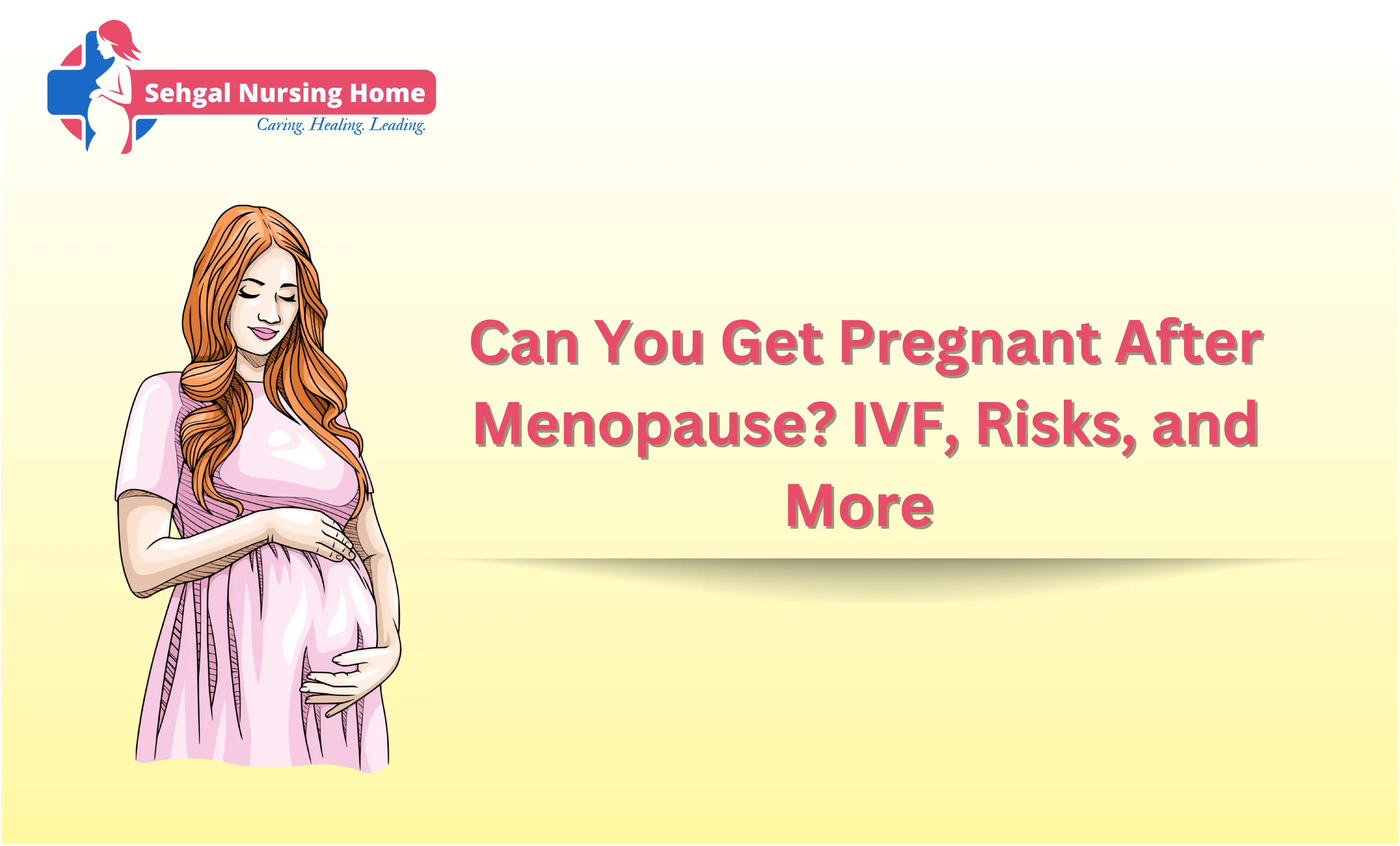
Whether one can become pregnant after menopause is a question that is more often asked, as women postpone childbearing to their 40s and over. It is important to know the difference between natural menopause and premature ovarian insufficiency. Menopausal pregnancy is not natural.
Nevertheless, IVF on donor eggs circumvents the lack of viable eggs completely, and the uterus can support a pregnancy despite the presence or absence of menopause.
This blog outlines the working mechanism of postmenopausal pregnancy, the medical procedure, the risk factors, and what to consult with an IVF specialist in Delhi before making such a big decision.
Menopause is a condition of 12 months without a menstrual period. At this stage, the ovaries are no longer releasing eggs, and production of oestrogen has reduced drastically. Natural fertilisation cannot take place without viable eggs.
Nevertheless, a pregnancy that is carried far beyond natural menopause is possible in the case of a uterus that is aided with hormone replacement. This is the medical foundation that enables donor egg IVF to be done for postmenopausal women.
It is done by retrieving eggs of a young screened donor and fertilising them with the sperm of the recipient partner. The embryos obtained are cultured to 5 days to a blastocyst stage. Oestrogen and progesterone supplementation are used to prepare the uterine lining of the recipient to replicate a natural cycle. into the prepared uterus, the embryo is then transferred.
This process does not require the body to have functioning ovaries of the recipient. The hormones are administered externally in the form of medication. This is the reason why the right medical preparation and monitoring can enable postmenopausal women to carry a pregnancy to term.
The majority of experts suggest a detailed heart check-up, diabetes test, and psychological counselling before a postmenopausal IVF consent. Sehgal Nursing Home holds complete medical screening of all donor eggs IVF applicants in Delhi.
Contact an IVF expert at www.sehgalnursinghome.com regarding your eligibility.
What is the maximum age for IVF with donor eggs in India? The ART Act 2021 allows individuals aged 50 years in India to undergo IVF. Indian laws do not permit women who are older than this age to be treated in registered ART clinics.
What are the success rates for donor egg IVF after menopause? The success rates of donor egg IVF are 40 to 55 per cent per transfer cycle in postmenopausal women. Since the age of the donor eggs is the determinant of success, the success rates are much higher than the IVF of the woman's own aged eggs.
Is donor egg IVF legal and ethical in India? Yes. The ART Act 2021 does not prohibit donor egg IVF in any way. The donors are anonymous, vetted, and paid according to the regulations. In this process, recipient couples get full legal parenthood rights over children born.
Naturally, it is not possible to get pregnant after menopause, but it can be done with the donor egg IVF as a result of a thorough medical preparation. When it is done with a trained IVF specialist in Delhi, who undertakes a comprehensive screening of the candidates before treatment, the process is safe among those who are fit to undergo it. In each situation, the primary variables are age, health condition, and realistic expectations.
© 2026 Sehgal Nursing Home, Inc. All rights reserved | Website designed by Digital Net India